110 Kilometres. 6100 M + Elevation. Two Days.
I’ve been asked a lot of questions since getting back from Madeira. How far was it? How long did it take? Did it hurt? But the one I keep coming back to is the one nobody has asked yet: why?
The Week Before
Five days before my flight, I was sat in Minor Injuries waiting for an x-ray on my ankle.
I had been playing hockey earlier that week and rolled it badly. The kind of roll where you immediately look down and think “that is not good”. It swelled to the size of a coke can. Walking was a challenge. Running 110 kilometres across a volcanic island in five days was, by most reasonable assessments, completely out of the question.
When the nurse asked what I was training for and I explained the race, she laughed. Not unkindly. Just the laugh of someone who thought I was joking. When she realised I was not, she looked at me with a mixture of pity and mild concern.
I was not asking whether I should run. I already knew I was going. The only thing I needed to know was whether running on it would cause lasting damage, or whether it was broken. It was not broken. There would be no lasting damage. That was enough.
I did not start that race in anything close to peak condition. Every single step from the start line hurt which makes the end result even more powerful (to me anyway).
The Race
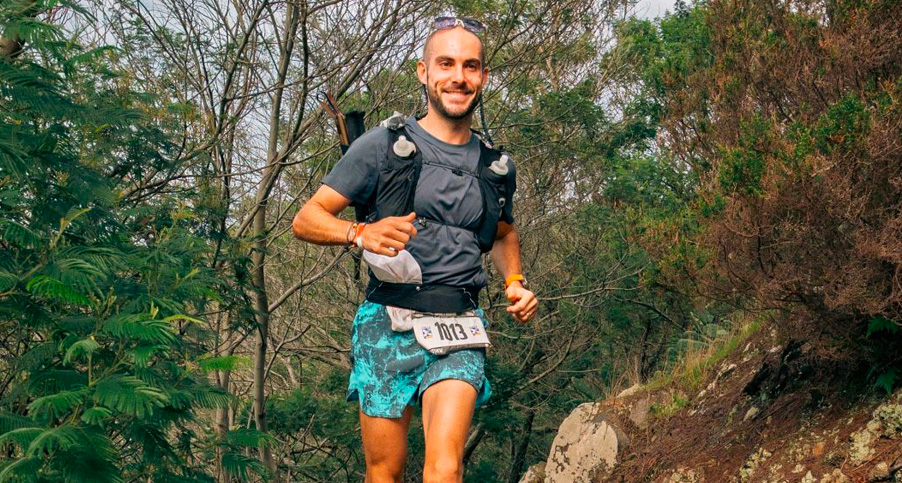
In November, I completed the Ultra X Madeira: 110km multi-stage ultramarathon across one of the most breathtaking landscapes on earth. Rated 5 out of 6 for difficulty and 4 out of 5 for technicality, it’s not a race that lets you off lightly. The course winds through volcanic ridges, tight trails, dense Forest and along sheer Atlantic cliffs, all while demanding every bit of physical and mental strength you can find.
The result? I finished 5th overall and 2nd in my age category. But honestly, I’m not writing this to talk about rankings. I’m writing this because of what happened in the miles in between.
“You never have time”: until you decide you do
I’m a father. I run a business. My diary is not exactly empty. But I’ve been showing up for years, and that consistency is everything. I started running in 2020 when I lived and worked abroad, away from family and friends, running was my escape and gave me the headspace to work through those personal mental challenges that the working day doesn’t always allow us time for!
In 2024, I ran a 80km (50 Mile) ultra and the London Marathon in the same week. This race was not a one-off moment of madness. It was the result of years of early mornings, late evenings and long runs while the rest of the world was still asleep.
Finishing 5th overall and 2nd in my age category did not happen by accident. It happened because of what was built over years of showing up, even when it was inconvenient, even when there were easier things to do with the time. Excellence is not a moment. It is a habit.
The same is true of anything worth doing, in business, in health, in life. You will never feel ready. You will never have a clear week. The only question is whether you want it enough to keep choosing it, day after day, until one day you look up and realise what all those days have quietly built.
The People Who Got Me There
I didn’t do this alone. Not even close.
My wife and our baby made the trip to Madeira, along with my mum and dad, my sister and her boyfriend. The terrain in Madeira is so demanding and remote that they could only reach one point on the course, roughly halfway through the second day. By the time I saw them, I had already covered more than 80 kilometres.
Those first 80 kilometres were hard in ways that are difficult to describe. But I knew they would be there. I knew that at some point on that second day, after the climbs and the aching and the hours of moving through the silence of that island, I would turn a corner and they would be waiting. That knowledge carried me further than any energy gel ever could.
And then there was my running partner, one of my closest mates, who ran the entire 110km alongside me. Every climb, every descent, every mile of flat that never quite felt flat enough. When one of us flagged, the other pulled forward. When the elevation profile looked brutal, we laughed about it rather than feared it. Ultra running teaches you very quickly that teamwork isn’t a nice to have. It’s survival.
But there’s another layer to that support that isn’t always visible on race day.
My coach, Andy McGhee, has been a huge part of this. It’s easy to think you can figure it all out yourself, especially when things are going well. But you can’t see everything from the inside.
Having someone with experience and perspective, someone who knows when to push, when to pull back, and when to tell you you’re getting it wrong, changes everything. Every session, every block of training, every decision in the build up to this race has had his fingerprints on it. Not just in the plan, but in the belief and the structure behind it.
It’s a good reminder of something bigger. Don’t be the person who thinks they always have the answer. Whether it’s a coach, a mentor, a colleague or your family, the people around you are often the difference between good and your absolute best.
That feels true at work too, doesn’t it?
The Hardest Part: Going Up
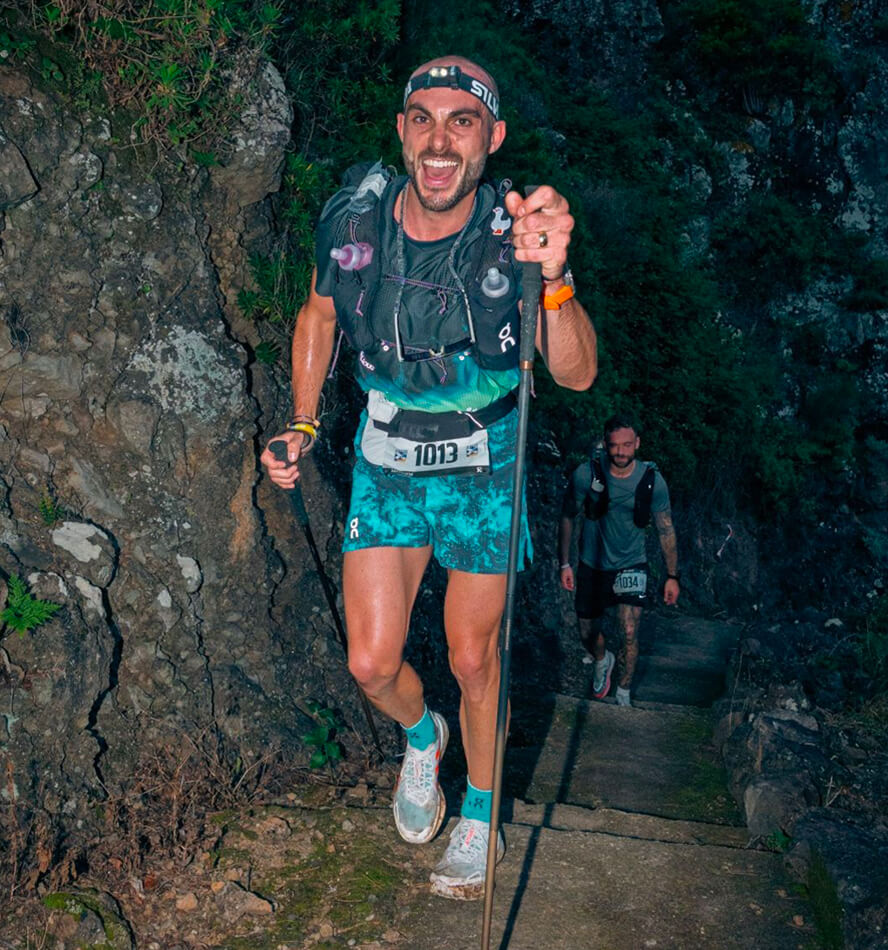
Let me be honest about the elevation. It is relentless. Madeira is not a gentle island. It rises steeply from the sea, and the course takes full advantage of that. There were climbs that made my lungs burn and my thighs scream. There were descents so steep your knees are begging you to slow down.
But here’s what those climbs gave me in return: extraordinary views. Clouds below your feet. The Atlantic stretching endlessly to the horizon. Ancient forest tracks that felt untouched. I ran through landscapes that looked like they were painted.
The challenge and the beauty were inseparable. You don’t get one without the other.
Don’t Run 110km. Run the Next Step.
If you stand at the start line of an ultramarathon and think about the finish, you will break. The number is too big. The distance is too abstract. The only sane way to run 110 kilometres is to stop thinking about 110 kilometres.
You run to the next checkpoint. You run to the top of the next climb. You run to the next hour. You break the impossible into the manageable, and you find that manageable things: done enough times, with enough grit: add up to something extraordinary.
That mindset: stop staring at the summit, focus on the step in front of you: is one I’ve brought back with me. Big goals, ambitious projects, hard conversations: they’re all more achievable when you stop being daunted by the whole and get very good at executing the next part.
So, Back to Why
Ultra running is where I go to find my limit. It’s the place where comfort is not an option, where excuses run out of road, where you discover what you’re actually made of when everything hurts and the finish line is still hours away.
I believe, deeply, that growth lives outside your comfort zone. Not near it, but outside it. You don’t learn what you’re capable of by doing things you already know how to do. You learn by attempting things that scare you a little, that stretch you, that demand something new.
That’s true in running. It’s true in business. And I hope it’s something we build into the culture here, a genuine belief that we are all capable of far more than we give ourselves credit for, and that the path to finding out starts with a single and slightly terrifying step forward.